
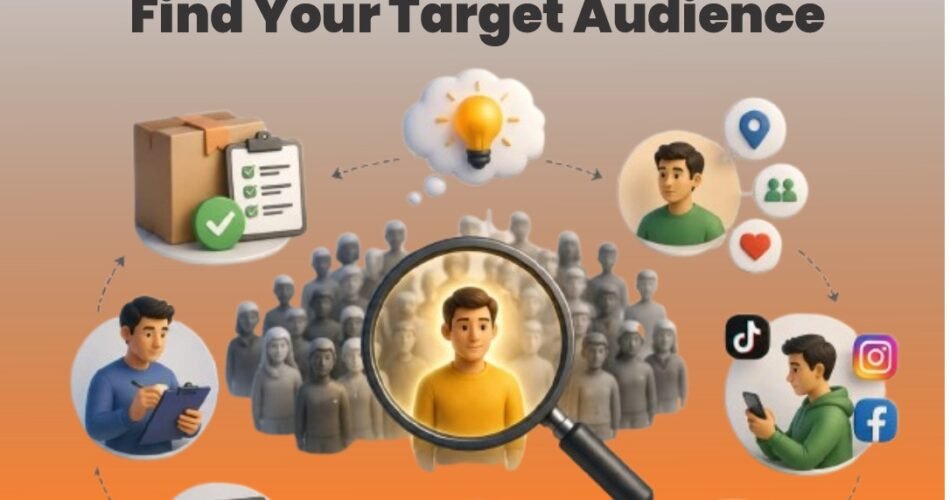
Stop Guessing, Find the Exact People Ready to Buy From You and watch everything about your marketing change for the better.
Here’s a hard truth most business owners discover too late.
Your product isn’t the problem. Your service isn’t the problem.
The problem is you’ve been talking to the wrong people and expecting the right results.
Trying to reach everyone drains your budget, dilutes your message, and leaves you frustrated. The moment you get specific about who you serve and where they spend time, everything shifts.
That’s exactly what this guide helps you do: find the exact people ready to buy from you and turn that clarity into marketing that actually works.
Let’s get into it.
1. First, Understand Who You’re Actually Talking To
Your target audience isn’t “everyone.” That’s not a strategy it’s a shortcut to wasted money.
Your audience is the specific group most likely to buy from you. They share common traits age, income, lifestyle, or a problem only you can solve.
For example, if you sell handmade baby clothes, your audience isn’t all parents. It’s new parents aged 25 to 38 who value quality, don’t mind spending more, and love shopping online.
The narrower your definition, the sharper your message and the faster you find the exact people ready to buy from you.
2. Next, Study the Customers You Already Have
If you already have customers, start right there. Real buyers are more valuable than any research tool.
Ask yourself how old are they? Where do they live? How did they find you? What problem brought them to your door?
Better yet, ask them directly with a short survey.
Then, look for the pattern. If seven out of ten customers are women aged 28 to 40 who found you on Instagram that’s a signal worth following immediately.
No customers yet? No problem. Make your best educated guess, move to Step 3, and come back once real data starts rolling in.
3. Build a Customer Persona
A customer persona is a fictional but realistic profile of your ideal buyer.
It gives you a concrete person to think about every time you write a caption, design an ad, or make a product decision.
Instead of asking “what should I post?” you ask “what would Amira find useful right now?”
That shift from vague to specific changes the quality of everything you create.
What a Strong Persona Looks Like
Amira, 31 — Freelance Graphic Designer, Lagos
- Goals: Save time, look professional, grow her client base
- Frustrations: Complicated tools, hidden fees, generic advice
- Platforms: Instagram daily, LinkedIn for work
- Influenced by: Business podcasts, peer recommendations
Start With One, Just One
One clear persona beats three vague ones every time.
Build one, use it consistently, and add more as your business and understanding grow.
4. Find Where Your Audience Spends Time
Knowing who your audience is only gets you halfway.
The next question where do they actually hang out online?
Showing up on the wrong platform is just as costly as talking to the wrong person.
Some communities live in Facebook Groups. Others gather on Reddit, Instagram, YouTube, or LinkedIn. Your job is finding which space your audience calls home — then showing up there consistently.
Don’t Just Find Them, Listen to Them
Finding where your audience is only scratches the surface.
The real gold is in reading what they say.
The exact words people use to describe their problems and desires? Those are your best content ideas and most powerful ad copy handed to you for free.
Try this: Search your product category in a Facebook Group or Reddit community. Read 20 comments. Write down every phrase that appears more than once.
Those are your audience’s words. Use them.
5. Study Your Competitors’ Audience
Your competitors have already spent time and money figuring out who buys in your market.
You don’t have to start from scratch, just pay close attention.
Visit their social pages with a researcher’s mindset. Who comments on their posts? What content gets the most engagement? What questions do followers ask repeatedly?
Complaints Are Opportunities in Disguise
When customers complain publicly about what a competitor does poorly, that’s your opportunity.
It tells you exactly what the market wants and isn’t getting.
Step into that gap and you’ve already got an edge before running a single ad.
6. Test, Listen, and Keep Refining
Your first audience definition is a hypothesis, not a final answer.
Once you start publishing content and running campaigns, real data sharpens your picture fast.
Watch your free analytics tools closely. Instagram Insights, Facebook Analytics, Google Analytics, and email open rates all tell a rich story if you read them carefully.
Make Audience Research an Ongoing Habit
Most beginners research their audience once and move on.
Growing businesses treat it as a continuous practice.
Every customer interaction teaches you something. Every campaign result refines your understanding.
Keep updating your persona as you learn, and your marketing keeps getting sharper every single month.
You have the map now, use it
Finding the right audience isn’t a one-day task.
But it’s the most valuable thing you can do for your marketing.
When you know exactly who you’re talking to, every piece of content, every ad, and every offer becomes more powerful.
You stop broadcasting into the void and start having real conversations with people who genuinely need what you offer.
That’s when marketing stops feeling like a chore and starts feeling like momentum.
The fastest-growing businesses aren’t always the ones with the biggest budgets.
They’re the ones who truly understand their audience and consistently, clearly, and confidently show up for them.
Ready to Take This Further?
Understanding your audience is just the beginning.
There’s a whole world of practical marketing strategy ready to help your business grow, and we’ve pulled it all together in one place for you.
Fill out the quick form below and get our free marketing tips guide straight to your inbox.
No fluff. No jargon. Just clear, actionable steps you can use starting today.
It takes less than 60 seconds.
Your future customers are already out there.

