
It rarely starts with a big problem.
A customer visits your website, signs up for something, and maybe even makes a purchase once. At first, there’s real interest.
But then nothing happens.
So, there’s no follow-up email, no reminder, and no next step — and the conversation simply stops.
A few days later, that same customer is engaging with a competitor.
And it’s not because your offer wasn’t good — it’s because your business didn’t stay present.
This is actually one of the biggest challenges small businesses face today: not getting customers, but losing them after the first interaction.
In 2026, attention is limited and competition is everywhere. That means if your brand isn’t consistently showing up in a customer’s inbox, you’re easily forgotten.
This is why email marketing is still one of the most powerful tools for business growth — not as a “newsletter tool,” but as a system that helps you stay connected to people who have already shown interest in your business.
The truth is, the real challenge isn’t sending emails — it’s staying consistent, following up properly, and automating the process.
And in this article we’ll discuss where email marketing tools come in.
Because modern platforms are no longer just email senders. Instead, they are systems that help you automate communication, organize leads, and turn scattered interactions into structured customer journeys.
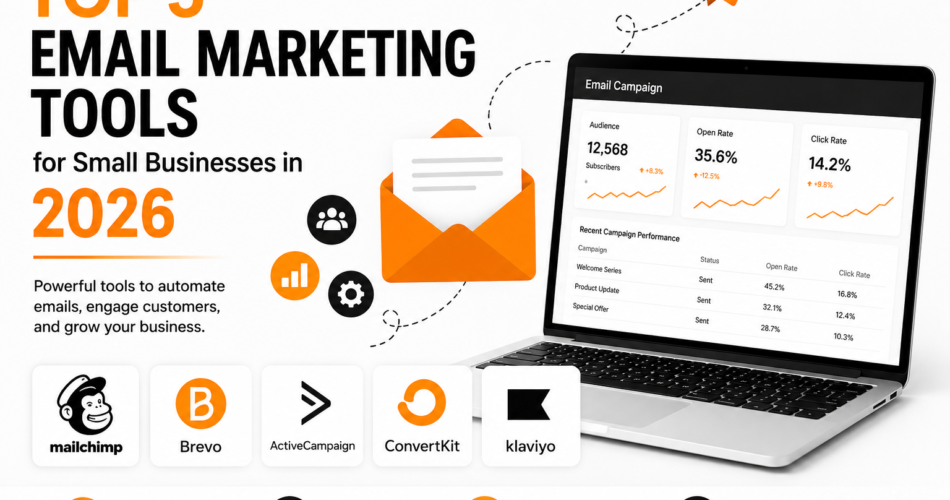
Let’s break down five of the best email marketing tools for small businesses in 2026 and how they help solve real business problems.
1. Mailchimp
Mailchimp is often the starting point for small businesses entering email marketing.
It is designed for simplicity, especially for business owners who don’t want complex syst
Why businesses use it
Many small businesses struggle with consistency. Leads come in, but follow-ups are forgotten, and communication becomes random.
Mailchimp helps fix this by adding structure.
It allows businesses to:
- collect leads
- send automated welcome emails
- schedule campaigns
- segment audiences
Strengths
- easy-to-use interface
- email templates for quick setup
- basic automation
- campaign analytics
- website integration
Best for
Startups, small businesses, and service providers who need a simple way to stay in touch with customers.
Practical benefit
Mailchimp helps businesses stay consistent.
Instead of manually remembering every follow-up, communication becomes automated and predictable.
2. Brevo
Brevo is built for businesses that want more than email — they want full communication management.
It combines email, SMS, CRM, and automation in one platform.
Why businesses use it
Many businesses lose opportunities because customer communication is scattered.
Brevo solves this by turning communication into structured workflows.
Strengths
- email and SMS marketing
- built-in CRM
- automation workflows
- transactional emails
- scalable pricing
Best for
Growing businesses, ecommerce brands, and service companies managing multiple customer touchpoints.
Practical benefit
Brevo improves response speed and follow-up consistency.
For example, a new lead can automatically receive an email, be added to a list, and enter a follow-up sequence without manual effort.
This reduces missed opportunities and improves customer experience.
3. ActiveCampaign
ActiveCampaign is for businesses that want advanced automation and deeper customer insights.
It focuses on behavior-driven marketing.
Why businesses use it
As businesses grow, simple emails are no longer enough.
They need:
- lead nurturing systems
- automation based on behavior
- sales integration
- personalization
ActiveCampaign handles this level of complexity.
Strengths
- advanced automation builder
- CRM integration
- customer tracking
- lead scoring
- personalized workflows
Best for
Agencies, B2B businesses, and growing companies focused on lead conversion.
Practical benefit
ActiveCampaign sends different messages based on customer behavior.
For example:
- a click triggers a nurture sequence
- inactivity triggers re-engagement emails
- high-intent leads are flagged for sales
This makes marketing more precise and effective.
4. ConvertKit
ConvertKit is built for simplicity and audience connection.
It is widely used by creators, coaches, and personal brands.
Why businesses use it
Not all businesses are focused on complex funnels. Some are focused on building trust and audience relationships.
ConvertKit helps with that.
Strengths
- simple interface
- automation sequences
- tagging system
- landing pages
- creator-focused tools
Best for
Personal brands, coaches, and content-driven businesses.
Practical benefit
ConvertKit helps businesses stay consistent without complexity.
You can:
- send automated email sequences
- deliver lead magnets
- segment audiences
- nurture subscribers
It’s ideal for building long-term relationships.
5. Klaviyo
Klaviyo, in particular, is designed specifically for ecommerce businesses focused on retention and repeat sales.
Why businesses use it
Ecommerce success depends on repeat customers, not just first purchases.
Klaviyo helps turn customer behavior into marketing actions.
Strengths
- ecommerce integration
- behavior-based automation
- advanced segmentation
- email + SMS campaigns
- revenue tracking
Best for
Online stores, Shopify brands, and product-based businesses.
Practical benefit
Klaviyo automatically reacts to customer behavior.
For example:
- abandoned carts trigger reminders
- buyers receive product recommendations
- loyal customers get exclusive offers
This increases repeat purchases and customer lifetime value.
Choosing the Right Tool
The best tool depends on your business stage:
- Mailchimp → simple email marketing
- Brevo → all-in-one communication
- ActiveCampaign → advanced automation
- ConvertKit → audience building
- Klaviyo → ecommerce retention
The goal is not just sending emails — it’s building a system that ensures consistent communication.
Conclusion
Most small businesses don’t lose customers because of bad products. Instead, they lose them because they don’t stay in touch.
This is where email marketing comes in — but only when it’s structured properly.
When used the right way, the right tool helps you automate communication, stay consistent, and maintain customer relationships without extra effort.
In 2026, businesses that grow are not just the ones that attract attention — they are the ones that keep it.
And email marketing remains one of the most reliable ways to do that.
Ready to grow your business with email marketing? Choose one of the tools above and start setting up your first automated campaign today.

